

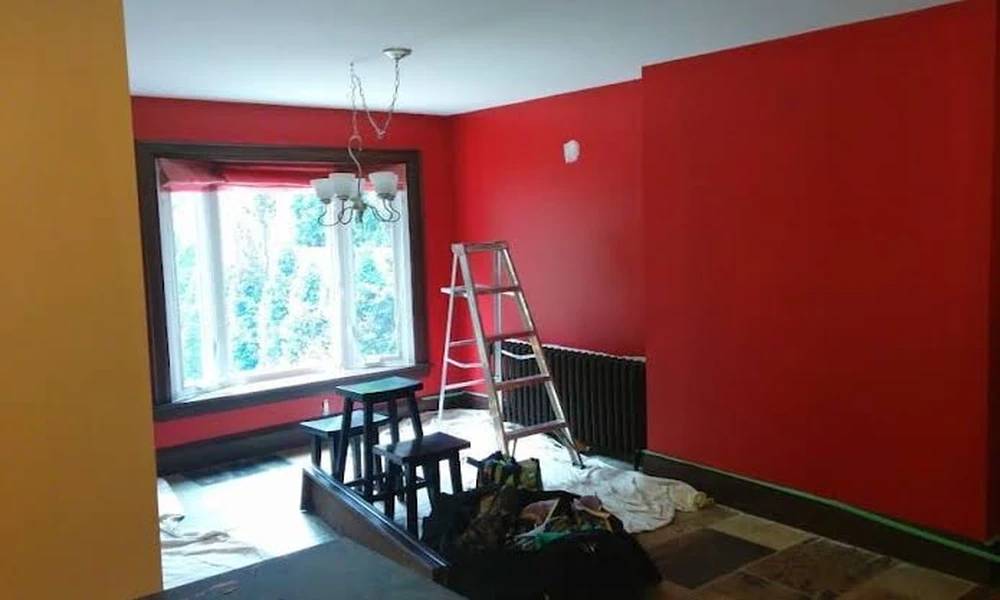
Most professional painters move furniture, yes. But the full picture is more layered than a simple yes or no. Whether your painter shifts the sofa, wardrobe, or the bookcase depends on the company’s policy, the size of the job, and what’s actually written into your quote before work starts.
What Painters Usually Handle Themselves
A typical residential painting crew shifts light and medium furniture away from the walls before starting work. Chairs, small tables, lamps, and bookshelves that two people can lift without strain all fall into this category. Larger pieces such as sofas and beds usually get slid into the centre of the room rather than carried out entirely, then covered with plastic sheeting or drop cloths to keep them safe from splashes and dust.
Most reputable firms build this into their standard service, and honestly, it’s the sensible way to run a job. It stops clients from straining their backs dragging a wardrobe across a wooden floor, and it keeps things moving instead of stalling every ten minutes because someone needs to reach a wall.
What Painters Generally Won’t Touch
Painters draw a line somewhere, and that line usually sits at anything fragile, extremely heavy, or awkward to take apart. Pianos, glass cabinets, fish tanks, and antique furniture often sit outside the standard service. So do wall units that need unbolting, or wardrobes that only fit through the doorway once they’ve been dismantled.
Many companies also steer clear of electronics such as televisions and sound systems. The moment a painter touches a screen and it cracks, that damage becomes their problem, so plenty won’t risk it. If a homeowner owns valuable or irreplaceable items, most painters would rather the client dealt with those personally before the crew arrives.
Why Some Firms Charge Extra
Furniture handling takes time, and time costs money. Some painting companies fold this labour into the quoted price from the start. Others treat it as an add-on, particularly for larger homes or jobs that involve several rooms packed with belongings.
Ask upfront whether moving furniture is part of the quote, or whether it gets billed separately by the hour. A proper written estimate should spell this out clearly, so there’s no argument once the invoice lands on the doormat. If a painter stays vague about it during the quote stage, treat it as a signal to ask sharper questions before signing anything.
Getting a Room Ready Before Painters Arrive
Even when a crew offers to move things, a bit of preparation on your part speeds up the job and lowers the risk of damage. Clear out small, breakable items yourself: picture frames, ornaments, anything perched on a shelf that could topple during the shuffle. Take down curtains and blinds if you can. Painters often charge extra for that task too.
Pulling the drawers out of dressers before the crew arrives helps more than people expect. A chest of drawers becomes far lighter and easier to shift once it’s empty, and there’s no risk of anything sliding out mid-lift and smashing on the floor.
Heavy and Fixed Items
Built-in wardrobes, fitted kitchens, and anything bolted to a wall stay exactly where they are. Painters work around these, using tape and thick sheeting to protect the surfaces rather than attempting to move them at all. Radiators follow the same rule. A decent painter will unscrew a radiator cover if it’s blocking access to the wall behind it.
For genuinely heavy furniture, such as a solid oak wardrobe or a bookcase stacked with hardbacks, some firms bring in extra hands or proper lifting equipment. Others ask the homeowner to sort this separately, especially when an item needs two or three strong people to lift it safely without anyone getting hurt.
Questions Worth Asking Before You Book
Before hiring anyone, ask exactly what the price covers. Does the quote include moving and covering furniture? Is there a weight or size limit on what the crew will shift? What happens if something gets damaged during the move? A painter with nothing to hide answers these questions without dodging them.
It also helps to ask whether the crew brings its own protective sheeting and tape, or whether you’re expected to supply dust sheets yourself. Small details like this often separate a well-run painting company from one that cuts corners to save time.
The Bottom Line
Professional painters generally move light and medium furniture as part of the job, protect what they can’t move, and often draw a firm line at anything fragile, oversized, or fixed in place. Clarifying these details before work begins saves both sides from confusion later on. A short conversation about furniture handling, before any paint tin gets opened, makes the whole job run far more smoothly for everyone involved.
